DaveMcK
Community Champion ⭐⭐⭐
May 2, 2019

NEW TOPIC: "FOR THE BIRDS"!

  • May 2, 2019
  • 129 replies
  • 71925 views

This is very simple! Find a picture or take a photo of a bird or group of birds. Then post it along with it's name, short information about it and photo credit if available. 


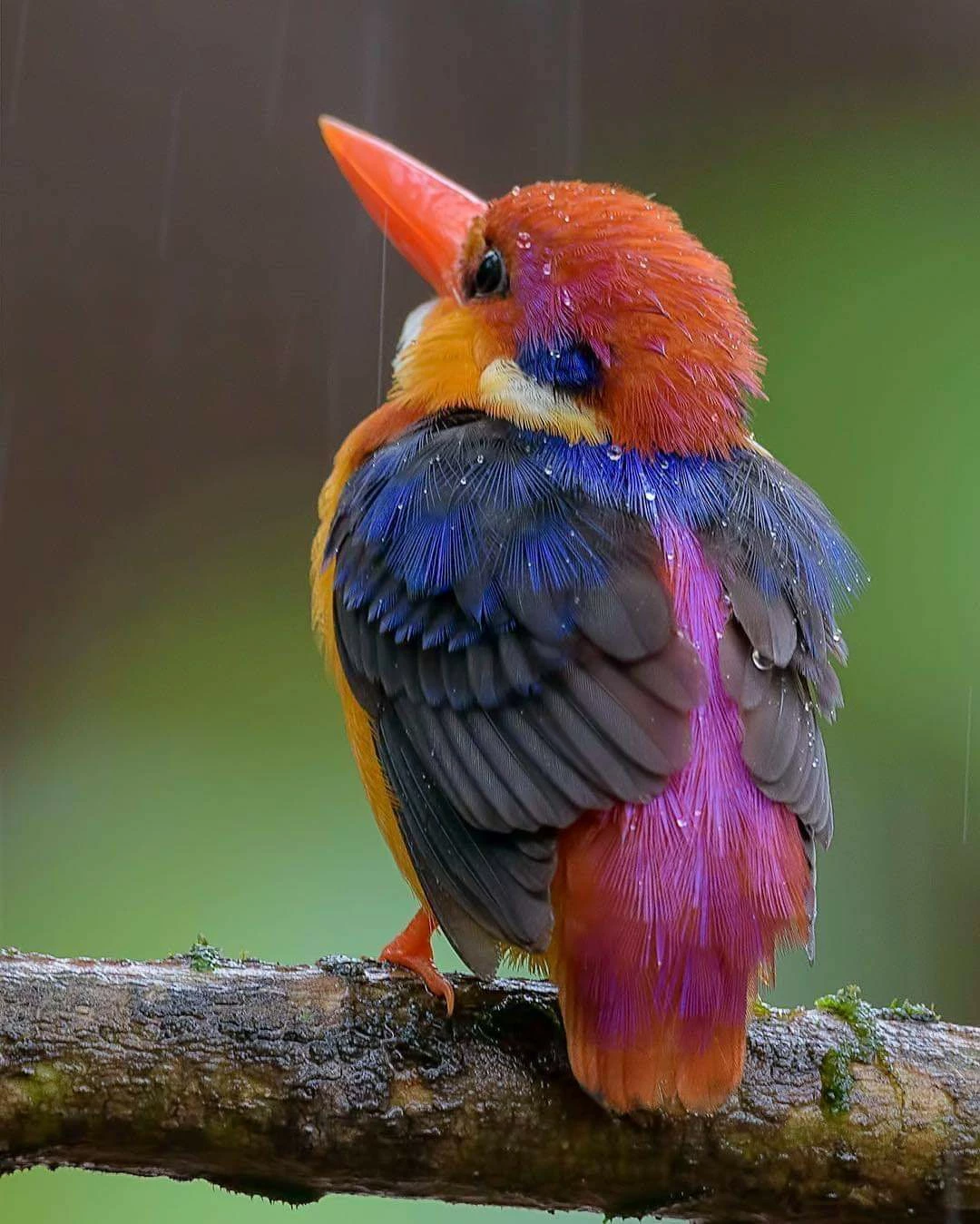
A gorgeous Dwarf Kingfisher enjoying the rain.

Credit: Rahul Belsare Photography.  

The Oriental dwarf kingfisher (Ceyx erithaca), also known as the black-backed kingfisher or three-toed kingfisher, is a species of bird in the family Alcedinidae. A widespread resident of lowland forest, it is endemic across much of the Indian subcontinent and Southeast Asia. It is found in BangladeshBhutanBruneiCambodiaIndiaIndonesiaLaosMalaysiaMyanmarSingaporeSri Lanka, and Thailand.


    This topic has been closed for replies.

    129 replies

    LydiaN586309
    Community Champion ⭐⭐⭐
    March 2, 2020

    Image result for STRANGE BIRD

    These are all...


    Image result for STRANGE BIRD

    varying types of...


    Image result for STRANGE BIRD

    Ruffs.


    Image result for images of THE RUFF bird

    The Ruff is a medium-sized wading bird that breeds in marshes and wet meadows across northern Eurasia.

    Image result for images of THE RUFF bird


    This highly gregarious sandpiper is migratory and sometimes forms huge flocks in its winter grounds, which include southern and western Europe, Africa, southern Asia and Australia.


    Image result for images of ruffs in courtship


    Ruffs are best known for their bizarre courtship plumage and rituals. In spring, male Ruffs are wildly variable in color and pattern of their neck ruffs and head tufts; they gather on display grounds, or "leks," and display to attract females. Rudimentary displays are occasionally seen from spring migrant Ruffs in North America.


    Contributor ⭐⭐
    March 23, 2020
    WE ARE LUCKY TO SHARE THIS PLANET WITH SUCH BEAUTIFUL CREATURES!
    EVEN A JOURNEY OF A THOUSAND MILES BEGINS WITH A SINGLE STEP.
    DaveMcK
    DaveMcKAuthor
    Community Champion ⭐⭐⭐
    March 23, 2020

    Another grouping of our feathered friends!  Once it gets warmer maybe  we can get some photos of returning feathered friends to our yards!


    Posted by Dave the Lighthouse Keeper
    DaveMcK
    DaveMcKAuthor
    Community Champion ⭐⭐⭐
    March 26, 2020


    The scarlet ibis (Eudocimus ruber) is a species of ibis in the bird family Threskiornithidae. It inhabits tropical South America and islands of the Caribbean. In form it resembles most of the other twenty-seven extant species of ibis, but its remarkably brilliant scarlet coloration makes it unmistakable. It is one of the two national birds of Trinidad and Tobago.

    A one year old

    This medium-sized wader is a hardy, numerous, and prolific bird, and it has protected status around the world. Its IUCN status is Least Concern. The legitimacy of Eudocimus ruber as a biological classification, however, is in dispute. Traditional Linnaean taxonomyclassifies it as a unique species, but some scientists have moved to reclassify it as a subspecies of a more general American ibis species, along with its close relative, the American white ibis (Eudocimus albus).


    The species was first classified by Carl Linnaeus in 1758. Initially given the binomial nomenclature of Scolopax rubra[2] (the name incorporates the Latin adjective ruber, "red"), the species was later designated Guara rubraand ultimately Eudocimus ruber.[3]

    Biologically the scarlet ibis is very closely related to the American white ibis (Eudocimus albus) and is sometimes considered conspecific with it,[2][4] leaving modern science divided over their taxonomy. The two birds each have exactly the same bones, claws, beaks, feather arrangements and other features – their one marked difference lies in their pigmentation.[5] Traditional taxonomy has regarded the two as separate and distinct.[5]

    Early ornithological field research revealed no natural crossbreeding among the red and white, lending support to the two-species viewpoint.[5] More recent observation, however, has documented significant crossbreeding and hybridization in the wild. Researchers Cristina Ramo and Benjamin Busto found evidence of interbreeding in a population where the ranges of the scarlet and white ibises overlap along the coast and in the Llanos in Colombia and Venezuela. They observed individuals of the two species mating and pairing, as well as hybrid ibises with pale orange plumage, or white plumage with occasional orange feathers, and have proposed that these birds be classified as a single species.[2] Hybridization has been known to occur frequently in captivity. However, the two color forms persist in the wild despite overlapping ranges and hybrid offspring having a distinctive color type, so according to the cohesion species concept they would be functionally different species.[6]

    Some biologists now wish to pair them with Eudocimus albus as two subspecies of the same American ibis.[2] Others simply define both of them as one and the same species, with ruber being a color variation of albus.

    Posted by Dave the Lighthouse Keeper
    DaveMcK
    DaveMcKAuthor
    Community Champion ⭐⭐⭐
    April 3, 2020

    Birds are a group of warm-blooded vertebrates constituting the class Aves, characterized by feathers, toothless beaked jaws, the laying of hard-shelled eggs, a high metabolic rate, a four-chambered heart, and a strong yet lightweight skeleton. Birds live worldwide and range in size from the 5 cm (2 in) bee hummingbird to the 2.75 m (9 ft) ostrich. There are about ten thousand living species,[3] more than half of which are passerine, or "perching" birds. Birds have wingswhose development varies according to species; the only known groups without wings are the extinct moa and elephant birds. Wings, which evolved from forelimbs, gave birds the ability to fly, although further evolution has led to the loss of flight in some birds, including ratites, penguins, and diverse endemic island species. The digestive and respiratory systems of birds are also uniquely adapted for flight. Some bird species of aquatic environments, particularly seabirds and some waterbirds, have further evolved for swimming


    Birds are a group of feathered theropoddinosaurs, and constitute the only living dinosaurs, and thus are reptiles. Likewise, the closest living relatives of birds are the crocodilians. Birds are descendants of the primitive avialans (whose members include Archaeopteryx) which first appeared about 160 million years ago (mya) in China. According to DNA evidence, modern birds (Neornithes) evolved in the Middle to Late Cretaceous, and diversified dramatically around the time of the Cretaceous–Paleogene extinction event 66 mya, which killed off the pterosaurs and all non-avian dinosaurs.

    Many social species pass on knowledge across generations, which is considered a form of culture. Birds are social, communicating with visual signals, calls, and songs, and participating in such behaviours as cooperative breeding and hunting, flocking, and mobbing of predators. The vast majority of bird species are socially (but not necessarily sexually) monogamous, usually for one breeding season at a time, sometimes for years, but rarely for life. Other species have breeding systems that are polygynous (one male with many females) or, rarely, polyandrous (one female with many males). Birds produce offspring by laying eggs which are fertilised through sexual reproduction. They are usually laid in a nest and incubated by the parents. Most birds have an extended period of parental care after hatching.

    Many species of birds are economically important as food for human consumption and raw material in manufacturing, with domesticated and undomesticated birds being important sources of eggs, meat, and feathers. Songbirds, parrots, and other species are popular as pets. Guano (bird excrement) is harvested for use as a fertiliser. Birds figure throughout human culture. About 120 to 130 species have become extinct due to human activity since the 17th century, and hundreds more before then. Human activity threatens about 1,200 bird species with extinction, though efforts are underway to protect them. Recreational birdwatching is an important part of the ecotourism industry.


    Posted by Dave the Lighthouse Keeper
    LydiaN586309
    Community Champion ⭐⭐⭐
    April 5, 2020

    I have so many bird feeders in my backyard because I want to make sure the birds have a place they can come to and find food.  The other reason is because I love watching the birds and all the different kinds of birds that come. 


    This morning I was visited by one lone Downy Woodpecker.  He looked just like this one....

    He came.  He ate.  Got his fill and then flew away.  I enjoyed his visit and all of the birds who stopped by today.  The feeders are almost empty.  So I guess I'll fill 'em up later on.

    The beautiful Downy Woodpecker

    DaveMcK
    DaveMcKAuthor
    Community Champion ⭐⭐⭐
    April 8, 2020

    Stunning Hummingbird Photos You Need to See


    Step into the world of hummingbirds with these amazing reader photos.


    It’s a magical moment when a hummingbird zips through your backyard or stops at your sugar-water feeder for a snack. From a ruby-throated hummingbird enjoying a refreshing rain shower to a male Anna’s hummingbird territorially puffing himself up, we’ve gathered together some of our favorite, jaw-dropping hummingbird photos from Birds & Blooms readers. You can submit your own hummingbird photo to us using our submission form. Enjoy!


    Posted by Dave the Lighthouse Keeper
    DaveMcK
    DaveMcKAuthor
    Community Champion ⭐⭐⭐
    April 15, 2020

    Here are a couple of cool photos with birds in them! The one with the Lighthouse is Heceta Hear on the Oregon's Pacific Coast. 


    Posted by Dave the Lighthouse Keeper
    DaveMcK
    DaveMcKAuthor
    Community Champion ⭐⭐⭐
    April 17, 2020

    Another great bird photo!

    Posted by Dave the Lighthouse Keeper
    LydiaN586309
    Community Champion ⭐⭐⭐
    April 17, 2020

    @DaveMcK wrote:

    Another great bird photo!


    Wow!  Awesome pic!  Thanx Dave!

    LydiaN586309
    Community Champion ⭐⭐⭐
    April 21, 2020

     The mourning Dove

     Almost every day, I find mourning doves filling themselves at my bird feeders.

     And generally, when you see one, you see his or her "partner-for-life" mate.

     For they generally are found in pairs.


    Mourning Doves are graceful, slender-tailed, small-headed doves that are common across the continent. Mourning Doves perch on telephone wires and forage for seeds on the ground; their flight is fast and bullet straight. Their soft, drawn-out calls sound like laments. When taking off, their wings make a sharp whistling or whinnying. Mourning Doves are the most frequently hunted species in North America.

    During the breeding season, you might see three Mourning Doves flying in tight formation, one after another. This is a form of social display. Typically the bird in the lead is the male of a mated pair. The second bird is an unmated male chasing his rival from the area where he hopes to nest. The third is the female of the mated pair, which seems to go along for the ride.


    Mourning Doves tend to feed busily on the ground, swallowing seeds and storing them in an enlargement of the esophagus called the crop. Once they’ve filled it (the record is 17,200 bluegrass seeds in a single crop!), they can fly to a safe perch to digest the meal.Mourning Doves eat roughly 12 to 20 percent of their body weight per day, or 71 calories on average.Perhaps one reason why Mourning Doves survive in the desert: they can drink brackish spring water (up to almost half the salinity of sea water) without becoming dehydrated the way humans would.


    The Mourning Dove is the most widespread and abundant game bird in North America. Every year hunters harvest more than 20 million, but the Mourning Dove remains one of our most abundant birds with a U.S. population estimated at 350 million.The oldest known Mourning Dove was a male, and at least 30 years, 4 months old when he was shot in Florida in 1998. He had been banded in Georgia in 1968.


    DaveMcK
    DaveMcKAuthor
    Community Champion ⭐⭐⭐
    April 25, 2020
     

    Researchers have discovered that the Carolina parakeet was the victim of a grave injustice.

    The green-bodied birds, made even more vibrant by their yellow heads and red faces, once thrived between the U.S. east coast and what is now Colorado. According to the BBC, the birds made their homes in old-growth forests and swamps for thousands of years. The species adapted to live off the toxic cockleburs, which did not injure the birds but often proved fatal for predators like cats. The birds were prolific until European settlers arrived in the New World.

    By 1918, the last remaining Carolina parakeet was held at the Cincinnati Zoo. It died on February 21 that year.

    Source: Wikimedia Commons
    A Mounted specimen of Conuropsis carolinensis, Museum Wiesbaden, Germany.


    Today, all that remains of one of North America’s only native parrots are taxidermied specimens and plates from aging Edwardian books. Meanwhile, modern day DNA testing indicates that the bird’s disappearance was not the result of inbreeding or predators. It was solely the fault of humans.

    “Many endangered species have been sequenced and what seems to be a pattern is that when populations are small and declining for a long period of time, this leaves some signals in their genomes that can be recognized,” said Carles Lalueza-Fox, of the University of Barcelona. “Even if you have a single specimen, as here, we have a genome from the father and a genome from the mother; two copies of each chromosome. If the population has been small for thousands of years, these two copies will be very similar to each other and over long stretches sometimes they will be identical.”

    Source: WikimediaCommons
    The Carolina parakeet was driven to extinction by hunters for pest control, for feathers to be used in the fashion industry, and rising competition with European honey bees.


    Lalueza-Fox and his colleagues found through mapping the DNA of two Carolina parakeets, that it was once part of a massive and diverse population, which came crashing down when a new threat was introduced.

    “The inference is that this bird was not subjected to a very long demographic decline for thousands of years, it was something very quick,” Lalueza-Fox said.

    The Carolina parakeet’s closest living relative, the BBC reports, is the Sun parakeet, found in South America. There is little genetic variation between individual birds in that species. From this we can infer that Carolina parakeets once far outnumbered their southern cousins.

    Source: Pixabay
    A Sun parakeet, the closest relative to the Carolina parakeet.

    Owing much to the Carolina parakeet’s demise are deforestation, unchecked hunting and trapping, and the introduction of European honeybees. American naturalist and author James Audubon had mourned the loss of the birds as early as 1832, about 70 years before they went extinct in the wild.

    Though they have been gone fore more than a century, the work done by the University of Barcelona scientists has opened up the potential of bringing them back.

    That’s right, de-extinction.

    Source: Wikimedia Commons
    Only taxidermied Carolina parakeets exist today.

    It’s possible the scientists could look at the Sun parakeet’s DNA and alter it to produce a Carolina parakeet offspring. But, that would involve editing several hundred protein codes in the delicate strands that define life, Lalueza-Fox said.

    It won’t be easy to bring the bird back from the dead, but the effort is getting attention from scientists around the world. Kevin Burgio, a biologist at the University of Connecticut, published an outline of “Lazarus ecology” in the journal Ecology and Evolution. Burgio, like many others, believes it’s possible to restore the birds in the wild by introducing the extinct DNA to close relatives within the specific environments where they once lived.

    Source: WikimediaCommons
    John James Audubon’s “Carolina Parakeets” which is a part of the permanent collection at the New York Historical Society.

    According to Smithsonian.com, scientists from the New York State Museum and New Mexico State University will use the mapped Carolina parakeet DNA and an understanding of the bird’s diet, taken from preserved feathers, to reintroduce the species.

    “Even if the Carolina parakeet never flies again, what scientists learn about this vanished American bird could keep its endangered tropical cousins aloft,” the Smithsonian reports.


    Posted by Dave the Lighthouse Keeper
    DaveMcK
    DaveMcKAuthor
    Community Champion ⭐⭐⭐
    April 27, 2020

    What amazing colorings the Strawberry Finch have!


    Posted by Dave the Lighthouse Keeper