DaveMcK
Community Champion ⭐⭐⭐
May 2, 2019

NEW TOPIC: "FOR THE BIRDS"!

  • May 2, 2019
  • 129 replies
  • 71928 views

This is very simple! Find a picture or take a photo of a bird or group of birds. Then post it along with it's name, short information about it and photo credit if available. 


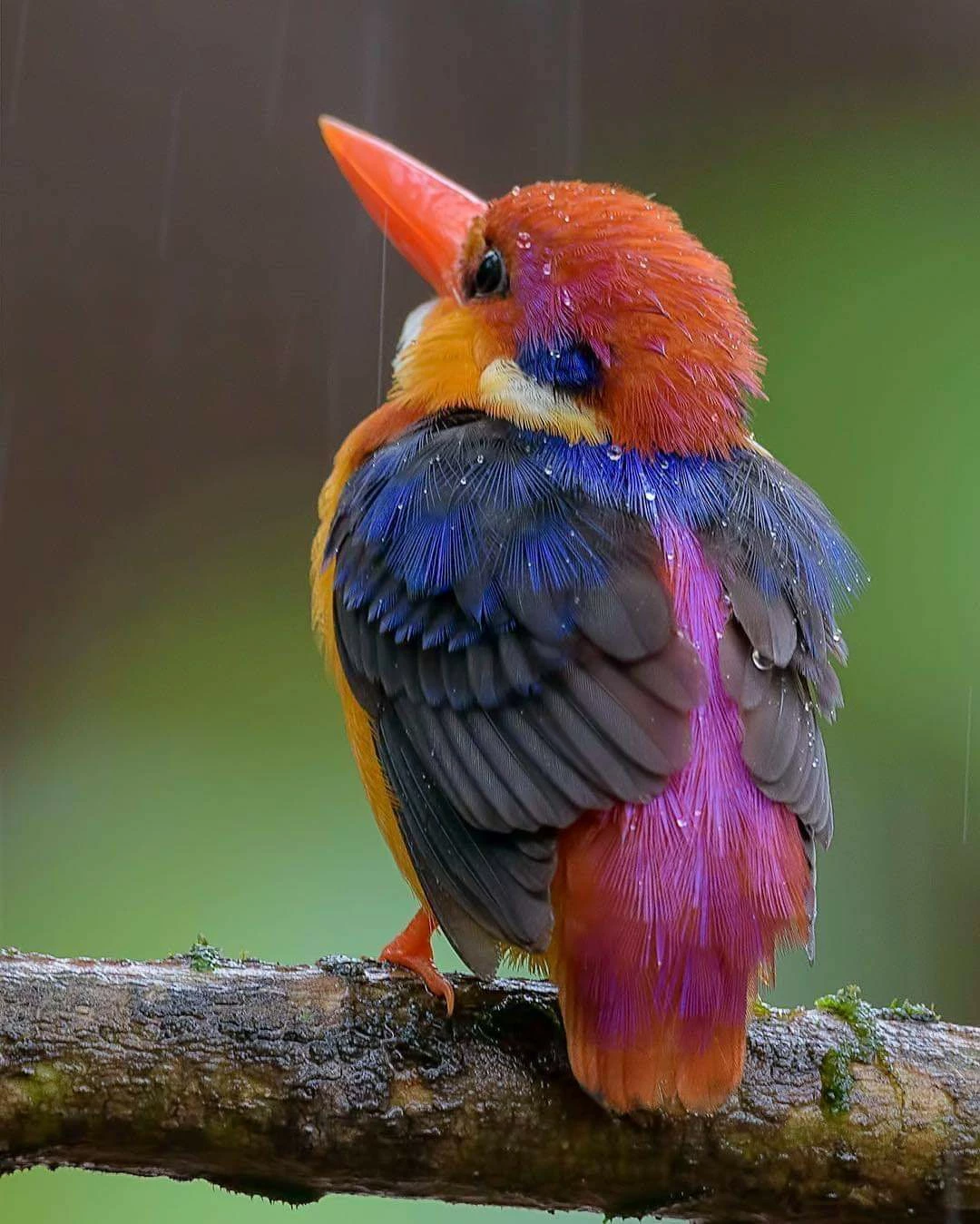
A gorgeous Dwarf Kingfisher enjoying the rain.

Credit: Rahul Belsare Photography.  

The Oriental dwarf kingfisher (Ceyx erithaca), also known as the black-backed kingfisher or three-toed kingfisher, is a species of bird in the family Alcedinidae. A widespread resident of lowland forest, it is endemic across much of the Indian subcontinent and Southeast Asia. It is found in BangladeshBhutanBruneiCambodiaIndiaIndonesiaLaosMalaysiaMyanmarSingaporeSri Lanka, and Thailand.


    This topic has been closed for replies.

    129 replies

    DaveMcK
    DaveMcKAuthor
    Community Champion ⭐⭐⭐
    October 6, 2019

    This is a real rare bird! 

    An extremely rare cardinal has birders and biologists flocking to Shelby County, Alabama this week, as images of a yellow cardinal have circulated around social media.

    Auburn University biology professor Geoffrey Hill said the cardinal in the photos is an adult male in the same species as the common red cardinal, but carries a genetic mutation that causes what would normally be brilliant red feathers to be bright yellow instead.


    Posted by Dave the Lighthouse Keeper
    LydiaN586309
    Community Champion ⭐⭐⭐
    October 6, 2019

    Wow! A yellow Cardinal!  How unusual and beautiful!

    DaveMcK
    DaveMcKAuthor
    Community Champion ⭐⭐⭐
    October 24, 2019

    The red-crested turaco (Tauraco erythrolophus) is a turaco, a group of African Otidimorphae birds. It is a frugivorous bird endemic to western Angola. Its call sounds somewhat like a jungle monk

    Description

    The red-crested turaco weighs 210-325 g and is 45-50 cm long. It looks similar to the Bannerman's turaco, but differs in crest and face colors. Both sexes are similar.

    Behavior

    They are seen in flocks of up to 30 birds, or in pairs. They usually remain in trees, only coming down to eat or drink.

    Voice

    A deep barking call. the female's call is slightly higher-pitched than the male's. They are highly vocal, particularly at dawn.[2]

    Reproduction

    Red-crested turacos are monogamous. Both mates build a flimsy nest 5 to 20 meters above the ground in dense foliage. After laying eggs, both birds incubate the eggs. The young leave the nest at 4-5 weeks old.

    As a national bird

    The national bird of the Angola nation. It occurs quite commonly along the length of the Angolan escarpment and adjacent forested habitats.


    Posted by Dave the Lighthouse Keeper
    DaveMcK
    DaveMcKAuthor
    Community Champion ⭐⭐⭐
    October 27, 2019

    Join me in supporting our feathered friends and providing them with a safe and healthy environment!  I hope you all have enjoyed this series about our feathered friends!


    Posted by Dave the Lighthouse Keeper
    Community Champion ⭐⭐
    October 28, 2019
    THANK YOU.
    SUPERGIRL, NO REALLY I MEAN IT! HER REAL NAME & MINE ARE THE SAME( FIRST 2 NAMES ARE)
    DaveMcK
    DaveMcKAuthor
    Community Champion ⭐⭐⭐
    October 27, 2019

    If we continue our current rate of greenhouse gas emissions, American Goldfinches are projected to disappear from 23 states including New Jersey, Illinois, Texas, Arizona, and the Dakotas.


    Audubon's new, ground-breaking report, Survival by Degrees: 389 Bird Species on the Brink, shows that two-thirds of North American bird species are at risk of extinction from climate change. But if we act quickly to reduce greenhouse gas emissions, we can help improve the chances for the overwhelming majority of species at risk.

    Right now, Congress is considering a bill that would help us switch from fossil fuels to clean, renewable energy sources. Ask your members of Congress to support the Better Energy Storage Technology Act of 2019!

    Photo: Lynn Cleveland/Audubon Photography Award

    Posted by Dave the Lighthouse Keeper
    Community Champion ⭐⭐
    October 28, 2019
    WISH I COULD GIVE YOU A DOZEN KUDOS FOR POSTING THIS- SO IMPORTANT THAT WE OWN UP TO THE ROOT CAUSE& TAKE ACTION! THANK YOU.
    SUPERGIRL, NO REALLY I MEAN IT! HER REAL NAME & MINE ARE THE SAME( FIRST 2 NAMES ARE)
    LydiaN586309
    Community Champion ⭐⭐⭐
    November 2, 2019

    THE

    Alisterus scapularis - Brunkerville.jpg

    AUSTRAILIAN

    KING PARROT


    Watch live-action video:

    https://www.bing.com/videos/search?q=king+parrot+australia&&view=detail&mid=DFC5030605021095D745DFC5030605021095D745&&FORM=VDRVRV


    THE AUSTRAILIAN KING PARROT

    The Australian king parrot (Alisterus scapularis) is endemic to eastern Australia ranging from Cooktown in Queensland to Port Campbell in Victoria. Found in humid and heavily forested upland regions of the eastern portion of the continent, including eucalyptus wooded areas in and directly adjacent to subtropical and temperate rainforest. They feed on fruits and seeds gathered from trees or on the ground.


    Adults of both sexes are about 43 cm (17 in) in length, including the long, broad tail. The adult male has a red head, breast, and lower undersides, with a blue band on the back of the neck between the red above and green on the back, the wings are green and each has a pale green shoulder band, the tail is green, and the rump is blue. The male has a reddish-orange upper mandible with a black tip, a black lower mandible with an orange base, and yellow irises. The plumage of the female is very different from the male having a green head and breast, a grey beak, and the pale shoulder band is small or absent. Juveniles of both sexes have brown irises and a yellowish beak, and otherwise resemble the female.


    In their native Australia, king parrots are occasionally bred in aviaries and kept as calm and relatively quiet household pets if hand-raised. They tend to be selective in their choice of seeds they eat and tend not to ingest small seeds in pre-packaged retail bags. They are relatively unknown outside Australia. As pets, they have limited "talking" ability and normally prefer not to be handled, but they do bond readily to people and can be very devoted. Life expectancy in the wild is unknown, but some pets have been known to live up to 25 years.


    DaveMcK
    DaveMcKAuthor
    Community Champion ⭐⭐⭐
    November 5, 2019


    California Quail are plump, short-necked game birds with a small head and bill. They fly on short, very broad wings. The tail is fairly long and square. Both sexes have a comma-shaped topknot of feathers projecting forward from the forehead, longer in males than females.

    Adult males are rich gray and brown, with a black face outlined with bold white stripes. Females are a plainer brown and lack the facial markings. Both sexes have a pattern of white, creamy, and chestnut scales on the belly. Young birds look like females but have a shorter topknot.

    California Quail spend most of their time on the ground, walking and scratching in search of food. In morning and evening they forage beneath shrubs or on open ground near cover. They usually travel in groups called coveys. Their flight is explosive but lasts just long enough to reach cover.

    You’ll find California Quail in chaparral, sagebrush, oak woodlands, and foothill forests of California and the Northwest. They’re quite tolerant of people and can be common in city parks, suburban gardens, and agricultural areas.

    Posted by Dave the Lighthouse Keeper
    LydiaN586309
    Community Champion ⭐⭐⭐
    November 12, 2019

    @DaveMcK, I love your pics as usual.  Isn't it amazing what God can do with neutral colors? 

    Just beautiful!

    DaveMcK
    DaveMcKAuthor
    Community Champion ⭐⭐⭐
    November 17, 2019

    Good morning to all of the Bird Watchers on the Front Porch!

    Posted by Dave the Lighthouse Keeper
    LydiaN586309
    Community Champion ⭐⭐⭐
    November 22, 2019

    @DaveMcK wrote:


    @DaveMcK, in my previous post, I commented on how creative God can be with neutrals.  But oh my goodness....how He outdoes himself when working in living color!
     

    DaveMcK
    DaveMcKAuthor
    Community Champion ⭐⭐⭐
    November 23, 2019

    Posted by Dave the Lighthouse Keeper
    DaveMcK
    DaveMcKAuthor
    Community Champion ⭐⭐⭐
    November 23, 2019


    Photographer Captured The Image Of A Tiny Owl Hiding From Rain Under A Mushroom


    Sometimes, the cutest things on earth are hidden from our eyes. But thanks to modern technology, most of the times these hidden things are brought in to focus. Recently, we came across with such a cute picture of a tiny owl hidden behind a giant mushroom. It was pretty and it seemed that many people were also awed with the picture. A few hours after releasing it, the picture went viral and might even have appeared in your News Feed! So, we thought of interviewing (She has done this interview few years back) the photographer, Tanja Brandt to know the story behind the picture. Speaking to us she said,

    Poldi, our little owl is 1,5 years old. I got him when he was five months old. He didn’t want to come out of his egg and he was very small, the smallest. His six sisters were all hatched, and as he was the last to be born, days after the others, he was very small. I also have a Harris Hawk named Phönix, a Weissgesichtseule named Gandalf, and a snow owl named Uschi”.

    Posted by Dave the Lighthouse Keeper
    LydiaN586309
    Community Champion ⭐⭐⭐
    November 24, 2019

    Despite how tired my body feels right now.....


    This is how I feel in my mind!!!

    Image result for animated image of peacock in bloom gif