DaveMcK
Community Champion ⭐⭐⭐
May 2, 2019

NEW TOPIC: "FOR THE BIRDS"!

  • May 2, 2019
  • 129 replies
  • 71923 views

This is very simple! Find a picture or take a photo of a bird or group of birds. Then post it along with it's name, short information about it and photo credit if available. 


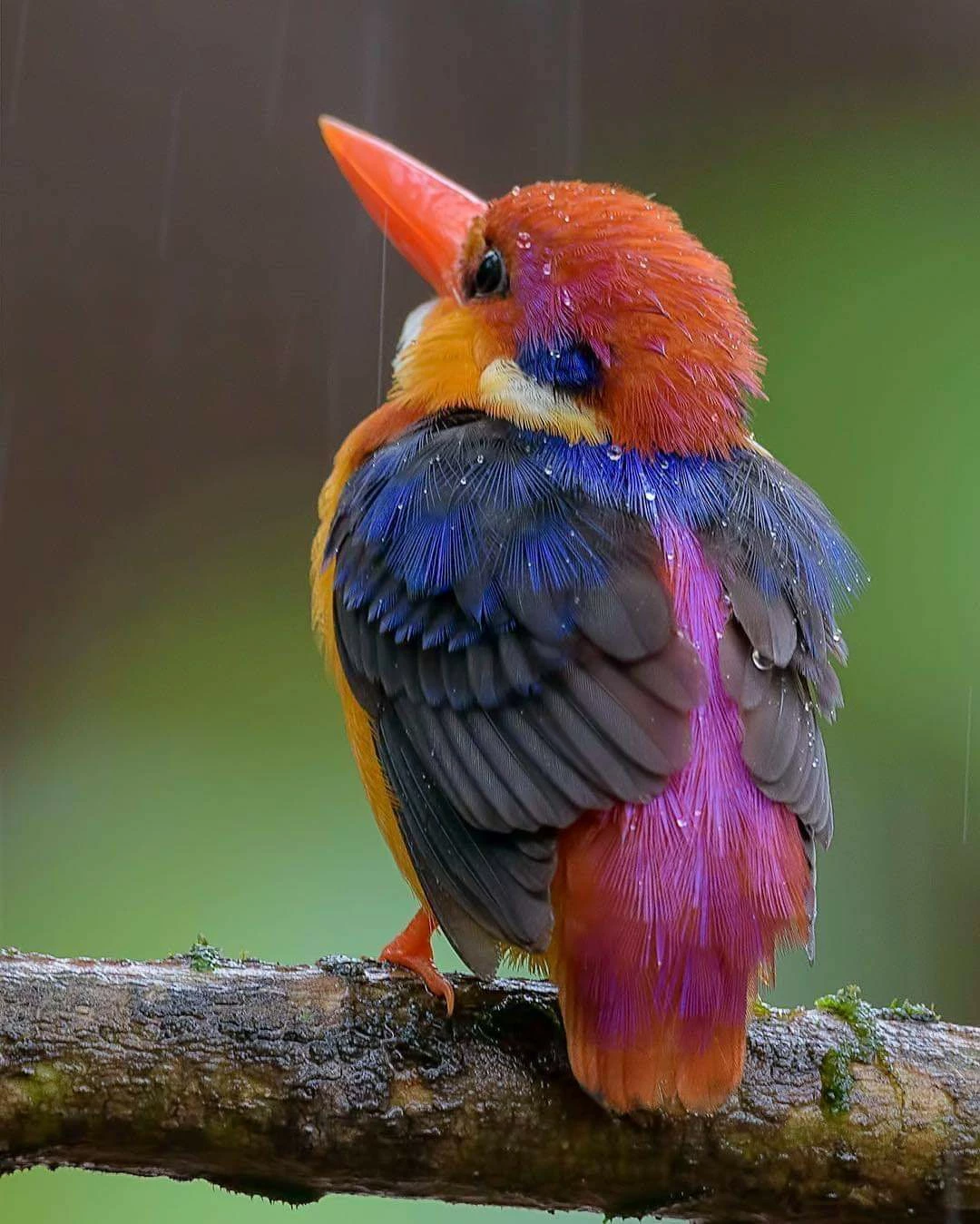
A gorgeous Dwarf Kingfisher enjoying the rain.

Credit: Rahul Belsare Photography.  

The Oriental dwarf kingfisher (Ceyx erithaca), also known as the black-backed kingfisher or three-toed kingfisher, is a species of bird in the family Alcedinidae. A widespread resident of lowland forest, it is endemic across much of the Indian subcontinent and Southeast Asia. It is found in BangladeshBhutanBruneiCambodiaIndiaIndonesiaLaosMalaysiaMyanmarSingaporeSri Lanka, and Thailand.


    This topic has been closed for replies.

    129 replies

    DaveMcK
    DaveMcKAuthor
    Community Champion ⭐⭐⭐
    May 16, 2019


    We have visited Decorah, Iowa and the nest a couple of times. 


    1. Where is this live cam located?

      This live cam overlooks a bald eagle nest just north of Decorah, Iowa. The nest sits in a white oak tree in a tiny forest bordering a secluded valley.  

    How big is this nest?

    Bald eagles are known for building massive nests over a period of years, and this is no exception! This nest is seven feet across at its widest point and nine feet long at its longest. It sits about 56 feet off the ground and the nest itself is 5.5 feet high. 

    The first nest (DNN0) was built in a pine tree. The branches collapsed after the second nesting season and the eagles moved to a dead elm tree. They nested there for just one year before moving to their current location in late 2013. In August of 2018, their nest collapsed and slid or fell out of the nest tree during an extremely heavy storm. None of the tree branches were broken or damaged, so they decided to build a starter nest in the same spot. 2019 will mark their sixth season and second nest in this spot.  

    How big are the Decorah Eagles?

    Bald eagles measure 34-42 inches long and have wingspans between six and eight feet. They can weigh up to 14 pounds. 

    How many young do the Decorah Eagles have at once?

    Bald eagles typically have two eggs per year, but sometimes one or three. Both parents will incubate the eggs and after the eggs hatch, at least one parent will stay with the young at all times. 

    Young bald eagles are entirely brown until they are about five years old, when they develop the distinctive white feathers on their head and tail. This is also the age when bald eagles begin to breed. 

    Bald eagles tend to mate for life, and will return to the same nest year after year, as they have in this case.  

    How long do bald eagles live?

    Bald eagles have very long lifespans and can live upwards of 28 years in the wild. In one case, a bald eagle was banded in 1977 in New York state and was struck and killed by a car in 2015--38 years later.  

    Do bald eagles migrate?

    Some bald eagles migrate great distances while others are year-long residents of their habitats. The migratory patterns of bald eagles depend on age, weather, geography, and food availability. 

    Where do bald eagles live?

    The national symbol for the United States, bald eagles are found only in North America. Their range stretches from far northern Canada and Alaska down to northern Mexico.  

    What do bald eagles eat?

    A bald eagle's diet depends on its habitat, but typically bald eagles prefer to eat fish as well as birds and small mammals when fish are not available. Bald eagles are also known to eat carrion. These bald eagles eat live and dead fish from the nearby stream, as well as squirrels, birds, rabbit, deer, possum and other small animals. 


    Link: https://youtu.be/pIEUiJaMPQ4


    Posted by Dave the Lighthouse Keeper
    LydiaN586309
    Community Champion ⭐⭐⭐
    May 16, 2019

    The Bald Eagle is such a beautiful and stately bird.

    Wonderful pics Dave!  Especially this one:

    DaveMcK
    DaveMcKAuthor
    Community Champion ⭐⭐⭐
    May 18, 2019


    FLAMINGOS ARE NATURALLY WHITE—THEIR DIET OF BRINE SHRIMP AND ALGAE TURNS THEM 

    We visited the San Diego Zoo in January of 2011. It was a surprise Birthday party for Mary's brother-in-law. This works out as we visited the San Diego Zoo in January of 2011. It was a surprise Birthday party for Mary's brother-in-law. This works out well for the story below which was written about the San Diego Zoo's flamingos. 

    Think pink—and orange? With their pink and crimson plumage, long legs and necks, and strongly hooked bills, flamingos cannot be mistaken for any other type of bird. These beauties have long fascinated people. An accurate cave painting of a flamingo, found in the south of Spain, dates back to 5,000 B.C. Today, images of flamingos are found in literature (Alice used them as croquet mallets in Through the Looking Glass by Lewis Carroll), and immortalized as plastic lawn ornaments!

    The flamingo’s pink or reddish color comes from the rich sources of carotenoid pigments (like the pigments of carrots) in the algae and small crustaceans the birds eat. We eat carotenoids, too, whenever we munch on carrots, beets, and certain other veggies, but not enough to turn us orange! American flamingos, a subspecies of greater flamingo, are the brightest, showing their true colors of red, pink, or orange on their legs, bills, and faces.

    In order to fly, flamingos need to run a few paces to gather speed. This speed is not related to the ground but rather to the air, so they usually take off facing into the wind. In flight, flamingos are quite distinctive, with their long necks stretched out in front and the equally long legs trailing behind. Their outstretched wings showcase the pretty black and red (or pink) coloration that, with slight variations, is shared by all flamingo species. When flying, flamingos flap their wings fairly rapidly and almost continuously. And, as with most other flamingo activities, they usually fly together in large flocks. The flamingos follow each other closely, using a variety of formations that help them take advantage of the wind patterns.

    Flamingos are social birds that live in groups of varying sizes, from a few pairs to sometimes thousands or tens of thousands. Their numbers add to the impressiveness of ritualized flamingo displays; the purpose of these displays is to stimulate hormone production and ensure that as many birds as possible will breed.

    Head-flagging: Stretching the neck with head up high and rhythmically turning the head from side to side.

    Wing salute: Showing off the contrasting colors with the tail cocked and the neck outstretched.

    Twist-preen: The bird twists its neck back and appears to preen its feathers with its bill quickly.

    Marching: The large, tightly packed flock walks together as one, before switching direction abruptly.

    Flamingos also use vocalizations and these displays to communicate between individuals or alert the group of possible danger. Their vocal repertoire includes growling, low gabbling, and nasal honking.

    Greater flamingosGreater flamingos sleeping in the shallows of a lake, some standing on one leg.

    Why do flamingos stand on one leg? Scientists aren’t sure. There is less heat lost through the leg if it is tucked next to the bird’s body; however, this behavior is also seen in hot climates. Another explanation is more mundane: it’s probably a comfortable position for standing. You can develop your own theory about this age-old question on your next visit to the Zoo or Safari Park, where the flamingos are always gorgeous and entertaining.

    HABITAT AND DIET

    Flamingos live in lagoons or large, shallow lakes. These bodies of water may be quite salty or caustic, too much so for most other animals. In some lakes, their only animal “neighbors” are algae, diatoms, and small crustaceans. That works in the flamingo’s favor, as the birds dine on these small creatures!

    Lesser flamingos taking off from a lake in KenyaLesser flamingos

    Chilean, Andean, and puna flamingos are found in South America; greater and lesser flamingos live in Africa, with greaters also found in the Middle East; the American or Caribbean flamingo is native to Mexico, the Caribbean, and the northernmost tip of South America.

    Long legs let flamingos wade into deeper water than most other birds to look for food. And speaking of food, flamingos also have very distinctive eating habits. The bill is held upside down in the water. Flamingos feed by sucking water and mud in at the front of the bill and then pumping it out again at the sides. Here, briny plates called lamellae act like tiny filters, trapping shrimp and other small water creatures for the flamingo to eat.

    The smaller puna, Andean, and lesser flamingos have deeper bills and stiff lamellae. This helps them filter very fine particles, such as algae, through their bill and keep bigger particles out. Greater and Chilean flamingos are larger and feed mostly on invertebrates such as brine flies, shrimps, and mollusks. They get these food items from the bottom mud by wading in shallow water. Sometimes they swim to get their food and sometimes by “upending” (tail feathers in the air, head underwater) like ducks.

    At the San Diego Zoo and the San Diego Zoo Safari Park, the flamingos are fed a special pellet diet that is made for zoo flamingos. This food has all the nutrients the flamingos need and a pigment that helps keep them “in the pink.” To allow the flamingos to eat in their normal way (taking in water and then pumping it back out), a water source just for feeding is near their food so they can get a “beakful” of water and then food—just like they would in the wild.

    FAMILY LIFE
    Caribbean flamingo parent with egg on mud nestAmerican flamingo with egg

    A flamingo nest is not fancy, just a mound of mud, maybe 12 to 24 inches (30 to 60 centimeters) high. The nest needs to be high enough to protect the egg from flooding and from the occasional intense heat at ground level. Both the male and female build the nest by ​using their bills to pull mud toward their feet. The top of the mound is concave so that any egg laid does not fall off. Neighboring nests are built very close, and bickering between nest mound occupants is common.

    Prior to breeding, the male is selected by the female, and he then closely follows behind her in shallow water. The individual courtship rituals tend to be subtle and inconspicuous to ​humans. The pair tends to stay together as long as there is reproductive success. If not, then the female may choose a new mate.

    Lesser flamingo with young chickLesser flamingo chick

    Flamingos lay one large, chalky white egg in a mud nest build like a sand castle by the parents. A parent sits on the mound, reaches over, picks up mud and dribbles it onto the nest, which can reach 2 feet (0.6 meters) in height and is usually surrounded by a trench as further protection from rising water. At hatching, a flamingo chick has gray down feathers and is the size of a tennis ball. It also has a straight, pink bill and swollen pink legs, both of which turn black within a week.

    After hatching, the chick stays on the nest mound for 5 to 12 days. During this time, the chick is fed a type of “milk” called crop milk that comes from the parents’ upper digestive tract. (Flamingos share this trait with pigeons.) Both males and females can feed the chick this way, and even flamingos that are not the parents can act as foster-feeders. The begging calls the hungry chick makes are believed to stimulate the secretion of the milk. As the parents feed their chicks the crop milk, they are drained of their color—so much so that their plumage turns a pale pink or white! The parents gain this color back eventually as the chicks become independent and eat on their own.

    By the time a chick leaves the nest, it can already walk and swim quite well. Chicks flock together in large groups called crèches, looked after by a few adults, possibly birds that have lost their own young. Parents visit the crèche and continue to feed their chick with the milky secretion. But how do they find their offspring in such a large and noisy group? Chicks and their parents recognize one another through their distinctive calls! Adult flamingos have few natural predators, as they tend to live in inhospitable places where the lagoons are pretty bare of vegetation, so few other birds or animals come there. But flamingo chicks are sometimes preyed upon by eagle species.

    AT THE ZOO

    Flamingos as ambassadors: Guests are instantly drawn to our American flamingo flock as they enter the San Diego Zoo. And who wouldn’t be? With their flamboyant color and amusing behaviors, flamingos have been on hand to welcome Zoo guests since 1932, about 10 years after the Zoo grounds opened to visitors. They are our unofficial ambassadors!

    While much is known about flamingo breeding behavior, there are never any guarantees. Any major or minor change to the flock or exhibit can start or stop breeding. For example, in the early 1980s, a number of flamingos were relocated. It was completely unexpected that this action would cause the remaining birds to stop breeding for the next 14 years! A number of remedies were tried. Finally, new birds were introduced and the exhibit renovated to improve the nesting area. One or both changes did the trick, and the Zoo’s flamingos began breeding again in 1996 and have bred almost every year since then. The Zoo has hatched more than 170 since 1957. Today, it is home to just under 90 adult American flamingos.

    Once a year, there is an event at the Zoo that is unlike any other. After weeks of preparation, three departments are mobilized, dozens of keepers are involved, all of the flamingos are caught up, and everyone gets wet! The occasion? The annual Flamingo Roundup! Why do we catch the whole flock—even the healthy ones—once a year? They are all due for their West Nile virus booster shot. Each flamingo is also weighed and given a general checkup during the roundup.

    Safari Park successes: ​At the San Diego Zoo Safari Park, the first greater flamingo egg was laid in 1998; six years later, another greater flamingo chick pecked its way out through its shell and into history in 2004 as the facility’s 100th hatching of this subspecies. Today, the Park has the largest flock of greater flamingos in the United States at around 150 birds. We have hatched 173 chicks, so far. The Safari Park is also home to lesser flamingos and Chilean flamingos.

    CONSERVATION

    Over time, people have used flamingos for food and medicine.Currently, no flamingo species is endangered, although the puna or James’s flamingo was thought to be extinct in 1924; it was rediscovered in 1957.

    But as with many wild species, the threat of habitat loss due to road construction and housing development is causing some populations to be threatened. In 1989, about 100 Caribbean flamingos died in Mexico’s Yucatan Peninsula from lead poisoning, due to the ingestion of lead shot. Lead bullets are now prohibited in that area.

    The Andean flamingo is considered the rarest of the flamingo species. It lives high in the mountains of Chile, Peru, Bolivia, and Argentina. People have been collecting the flamingos’ eggs and expanding into their habitat with farms, road construction, and urban development. Chile has now established a national flamingo reserve around one of the lakes used by the birds for breeding colonies and is taking steps to protect other lakes for the flamingos.

    The Flamingo Specialist Group was created in 1978 to study, monitor, and help conserve the world’s flamingo populations. Working with the International Union for Conservation of Nature, the group monitors and surveys wild flamingos and develops action plans for species that may be threatened.

    Posted by Dave the Lighthouse Keeper
    gm5271
    Contributor ⭐⭐⭐
    May 19, 2019

    @DaveMcK 

    Wow Dave in all my zoo visits I've not been aware or recall that being reason for their coloring

    My mom always said that I was a Flamingo I was just over 6' & 90 lbs in teens and always stood with one foot at my knee no longer that tall nor skinny but still stand that way 

    Enjoy your weekend 

    Ginger  ; ) 

    LydiaN586309
    Community Champion ⭐⭐⭐
    May 19, 2019

    Dave, the pics of the flamingos are absolutely beautiful!

    Lydia

    LydiaN586309
    Community Champion ⭐⭐⭐
    May 19, 2019

    The Golden Chinese Pheasant

    The Golden Pheasant, (Chrysolophus pictus), also known as the ‘Chinese Pheasant’ is one of the more popular species of pheasant which is native to the mountainous forests of Western and Central China.

    The Golden Pheasant was introduced to the United Kingdom around 100 years ago and there are around 101 – 118 mating pairs in the summer. This hardy, gamebird belongs to the order: Galliformes and is a smaller species of pheasant.

    The Golden Pheasant along with Lady Amherst Pheasant (Chrysolophus amherstiae), make up the group of ‘Ruffed Pheasants’ named for their ruff which is spread across their face and neck during courtship.


    Beautiful Golden Pheasants


    Male and female Golden Pheasants look different in appearance. Males measure 90 – 105 centimetres in length with the tail making up two thirds of the total length. Females are slightly smaller measuring 60 – 80 centimetres in length with the tail making up half of the total length. Their wingspan is around 70 centimetres and they weigh around 630 grams.

    Male Golden Pheasants can be easily identified by their bright colouring. They have a golden crest tipped with red which extends from the top of their heads, down their necks. They have bright red underparts, dark coloured wings and a pale brown, long, barred tail. Their rumps are also golden, upper backs are green and they have bright yellow eyes with a small black pupil. Their face, throat and chin are a rust colour and their wattles and orbital skin are yellow. Beak, legs and feet are also yellow.

    Female Golden Pheasants are less colourful and more duller than males. They have a mottled brown plumage, pale brown face, throat, breast and sides, pale yellow feet and are more slender in appearance.

    GOLDEN PHEASANT HABITAT

    The Golden Pheasant’s preferred habitats are dense forests and woodlands and sparse undergrowth.


    GOLDEN PHEASANT DIET

    Golden Pheasants mainly feed on the ground on grain, invertebrates, berries, grubs and seeds as well as other kinds of vegetation.

    GOLDEN PHEASANT BEHAVIOUR

    Golden Pheasants are very timid birds and will hide in dark, dense forests and woodlands during the day and roost in very high trees during the night. Golden Pheasants often forage on the ground despite their ability to fly, this may be because they are quite clumsy in flight. However, if they are startled, they are capable of taking off in a sudden fast upward motion with a distinctive wing sound.

    Little is known about their behaviour in the wild as although the males are very colourful birds, they are difficult to spot. The best time to possibly observe a Golden Pheasant is very early in the morning when they may be seen in clearings.

    Vocalisations include a ‘chack chack’ sound. Males have a distinctive metallic call during the breeding season. Also, during the males elaborate courtship display, he will spread his neck feathers over his head and beak, like a cape.

    Image result for golden pheasant flying

    GOLDEN PHEASANT REPRODUCTION

    Female Golden Pheasants lay around 8 – 12 eggs in April. Incubation time is around 22 – 23 days. The chicks fledge after 12 – 14 days. Males acquire their bright colours during their second year of life but are sexually mature in their first year. The life span of a Golden Pheasant is 5 – 6 years.

    Image result for golden pheasant flying

    GOLDEN PHEASANT CONSERVATION STATUS

    Golden Pheasants are classed as ‘Least Concern’ by the IUCN which stands for The International Union for the Conservation of Nature.

    DaveMcK
    DaveMcKAuthor
    Community Champion ⭐⭐⭐
    May 27, 2019
    Posted by Dave the Lighthouse Keeper
    DaveMcK
    DaveMcKAuthor
    Community Champion ⭐⭐⭐
    June 1, 2019


    Habitat

    Ruby-throated Hummingbirds occur in deciduous woodlands of eastern North America as well as across the Canadian prairies. Commonly associated with old fields, forest edges, meadows, orchards, stream borders, and backyards. On their tropical wintering grounds, Ruby-throated Hummingbirds live in dry forests, citrus groves, hedgerows, and scrub.Back to top

    Food

    Ruby-throated Hummingbirds feed on the nectar of red or orange tubular flowers such as trumpet creeper, cardinal flower, honeysuckle, jewelweed, bee-balm, red buckeye and red morning glory, as well as at hummingbird feeders and, sometimes, tree sap. Hummingbirds also catch insects in midair or pull them out of spider webs. Main insect prey includes mosquitoes, gnats, fruit flies, and small bees; also eats spiders. Ruby-throated Hummingbirds sometimes take insects attracted to sap wells or picks small caterpillars and aphids from leaves.Back to top

    Nesting NEST PLACEMENT

    Females build their nests on a slender, often descending branch, usually of deciduous trees like oak, hornbeam, birch, poplar, or hackberry; sometimes pine. Nests are usually 10-40 feet above the ground. Nests have also been found on loops of chain, wire, and extension cords.

    NEST DESCRIPTION

    The nest is the size of large thimble, built directly on top of the branch rather than in a fork. It’s made of thistle or dandelion down held together with strands of spider silk and sometimes pine resin. The female stamps on the base of the nest to stiffen it, but the walls remain pliable. She shapes the rim of the nest by pressing and smoothing it between her neck and chest. The exterior of the nest is decorated (probably camouflaged) with bits of lichen and moss. The nest takes 6-10 days to finish and measures about 2 inches across and 1 inch deep.

    NESTING FACTS
    Clutch Size:1-3 eggs
    Number of Broods:1-2 broods
    Egg Length:0.5-0.6 in (1.2-1.4 cm)
    Egg Width:0.3-0.3 in (0.8-0.9 cm)
    Incubation Period:12-14 days
    Nestling Period:18-22 days
    Egg Description:Tiny, white, weighting about half a gram, or less than one-fiftieth of an ounce.
    Condition at Hatching:Naked apart from two tracts of gray down along the back, eyes closed, clumsy.
    Back to top


    BehaviorLike all hummingbirds, ruby-throats are precision flyers with the ability to fly full out and stop in an instant, hang motionless in midair, and adjust their position up, down, sideways, and backwards with minute control. They dart between nectar sources with fast, straight flights or sit on a small twig keeping a lookout, bill waving back and forth as the bird looks around. Male Ruby-throated Hummingbirds aggressively defend flowers and feeders, leading to spectacular chases and dogfights, and occasional jabs with the beak. They typically yield to larger hummingbird species (in Mexico) and to the notoriously aggressive Rufous Hummingbird. Males give a courtship display to females that enter their territory, making a looping, U-shaped dive starting from as high as 50 feet above the female. If the female perches, the male shifts to making fast side-to-side flights while facing her.Back to top
    Conservation

    Ruby-throated Hummingbird populations have steadily increased every year from 1966 to 2014, according to the North American Breeding Bird Survey. Partners in Flight estimates a global breeding population of 20 million with 84% spending some part of the year in the U.S., 51% in Mexico, and 16% breeding in Canada. The species rates an 8 out of 20 on the Continental Concern Score. Ruby-throated Hummingbird is not on the 2014 State of the Birds Watch List. Hummingbird feeders are generally safe for hummingbirds, but they can create a problem if they make the birds easy targets for cats or if the feeders are placed around nearby windows that the birds might fly into.Back to top

    Backyard Tips


    You can attract Ruby-throated Hummingbirds to your backyard by setting up hummingbird feeders or by planting tubular flowers. Make sugar water mixtures with about one-quarter cup of sugar per cup of water. Food coloring is unnecessary; table sugar is the best choice. Change the water before it grows cloudy or discolored and remember that during hot weather, sugar water ferments rapidly to produce toxic alcohol. Be careful about where you put your hummingbird feeders, as some cats have learned to lie in wait to catch visiting hummingbirds. Find out more about what this bird likes to eat and what feeder is best by using the Project FeederWatch Common Feeder Birds bird list.

    Back to top
     
    Posted by Dave the Lighthouse Keeper
    Community Champion ⭐⭐
    June 3, 2019

     NO DOUBT THE ONE HUMMINGBIRD  I SAW UPON MOVING INTO MY HOUSE IN 2009 WAS ATTRACTED BY THE GIANT TRUMPET VINE   ON THE ( PULLING IT DOWN IN SPOTS, OF COURSE, BUT OH WELL. I'LL GLADLY SACRIFICE  A BIT OF FENCE TO ACCOMMODATE  THE BIRDS, BUTTERFLIES,& BEES!) FENCE. WHEN IT DIES OFF IN THE WINTER- IT LEAVES A GIANT DRIED "MEGANEST"- 3 OR 4 FEET IN DIAMETER. THE FENCE REPAIR PEOPLE THINK I'M NUTS SINCE I  WON'T LET THEM PULL IT(  HABITAT) DOWN. 

    SUPERGIRL, NO REALLY I MEAN IT! HER REAL NAME & MINE ARE THE SAME( FIRST 2 NAMES ARE)
    LydiaN586309
    Community Champion ⭐⭐⭐
    June 5, 2019

    Image result for Gouldian finch birds

    Gouldian Finch


    The Gouldian finch (Erythrura gouldiae), also known as the Lady Gouldian finch, Gould's finch or the rainbow finch, is a colourful passerine bird endemic to Australia. There is strong evidence of a continuing decline, even at the best-known site near Katherine in the Northern Territory.


    Large numbers are bred in captivity, particularly in Australia. In the state of South Australia, National Parks & Wildlife Department permit returns in the late 1990s showed that over 13,000 Gouldian finches were being kept by aviculturists. If extrapolated to an Australia-wide figure this would result in a total of over 100,000 birds. In 1992, it was classified as "endangered in the wild" under IUCN's criteria C2ai. This was because the viable population size was estimated to be less than 2,500 mature individuals, no permanent subpopulation was known to contain more than 250 mature individuals, and that a continuing decline was observed in the number of mature individuals. It is currently subject to a conservation program.


    Common Names:   Lady Gouldian, Rainbow finch, name sometimes shortened to Gould.


    Description


    Male: The breast and belly colors are usually used to determine sex. Males will have a brighter and darker color of purple on the chest and the yellow of the belly will be darker and more intense than the female. The green back color and the light blue around the face mask is also darker. Often the face mask in males are larger and clearer than the females, but is not always the case as their are some strains of birds that have equal color in both sex's face mask. The males will also sing a nearly inaudible song while stretching and hopping on the perch. They will usually begin this song long before they have completed their molt into adult colors.

    Female: The female has more subdued colors on her chest, belly and back. The female's beak will turn from a pearly white to black when she is in breeding condition.

    LydiaN586309
    Community Champion ⭐⭐⭐
    June 9, 2019

    Image result for Kakapo birds

    Believe it or not, this is a bird.  It is called a Kakapo.

    Image result for Kakapo birds

    The kakapo, also called owl parrot, is a species of large, flightless, nocturnal, ground-dwelling parrot of the super-family Strigopoidea, endemic to New Zealand. It has finely blotched yellow-green plumage, a distinct facial disc, a large grey beak, short legs, large feet, and relatively short wings and tail.  It can live up to 95 years.  A typical adult male weighs in anywhere between 4.4 to 8.8 pounds.  Though the Kakapo cannot fly, it is an excellent climber, ascending to the crowns of the tallest trees.
     
     
    Community Champion ⭐⭐
    June 10, 2019
    SO COOL- THANKS FOR SHARING!
    SUPERGIRL, NO REALLY I MEAN IT! HER REAL NAME & MINE ARE THE SAME( FIRST 2 NAMES ARE)
    LydiaN586309
    Community Champion ⭐⭐⭐
    June 10, 2019

    @l483260l wrote:
    SO COOL- THANKS FOR SHARING!

    SUPERGIRL, NO REALLY I MEAN IT! HER REAL NAME & MINE ARE THE SAME( FIRST 2 NAMES ARE)

    ******************************************************

    Hey @l483260l, just outta curiosity and since there have been at least two Supergirls, I hafta ask:  Are your first two names Helen Rachel or Melissa Marie?


    LydiaN586309
    Community Champion ⭐⭐⭐
    June 14, 2019

    King-Vulture

    This is a King Vulture.  King Vulture is a new world vulture found in Central and South America. This large bird of prey has bald head and gray to black ruff and is the largest of the new world vultures.

    Image result for king vulture

    Physical Description

    The king vulture has short, broad wings. From the neck down, it is white with a black band running along the rear edge of the wings. A small collar of feathers at the base of the neck is blackish-gray, while the bare skin on the head and neck is orange, green, yellow and purplish blue.

    The crown is covered with small, bristle-like feathers, and the bird has a fleshy wattle directly above the nostrils. King vultures do not tolerate cold conditions well. Males and females look very similar to each other.

    Size

    King vultures grow to about 2.5 feet (0.8 meters) tall and can weigh up to 8 pounds (3.7 kilograms), making them the largest New World vulture, except for condors.

    Native Habitat

    These vultures range from southern Mexico to southern Argentina, where they prefer densely forested, tropical, lowland habitat.

    Image result for king vulture

    Food/Eating Habits

    King vultures eat carrion. They have a thick, strong beak which is well adapted for tearing, and long, thick claws for holding the meat. They have keen eyesight and good sense of smell, which they use to find their food.

    When a king vulture lands, other birds make way for it. Though it appears to dominate over a feeding site, this vulture actually relies on other stronger-beaked carrion-eaters to initially rip open the hide of a carcass. Often the first at a carcass site, the king vulture will eat the eyes of the animal while waiting for the other vultures. Eyes are both highly nutritious and easy to reach before the animal's hide is opened.

    Reproduction and Development

    King vultures nest on the ground in tree stumps, hollow logs or other natural cavities. Their nest consists of very little material; usually just scratched out of the existing soil. The king vulture usually lays a solitary egg. Both parents share the responsibilities of incubation.


    Smithsonian’s National Zoo & Conservation Biology Institute 


    DaveMcK
    DaveMcKAuthor
    Community Champion ⭐⭐⭐
    June 14, 2019


        The mandarin duck (Aix galericulata) is a perching duck species native to East Asia. It is medium-sized, at 41–49 cm (16–19 in) long with a 65–75 cm (26–30 in) wingspan. It is closely related to the North American wood duck, the only other member of the genus AixAix is an Ancient Greekword which was used by Aristotle to refer to an unknown diving bird, and galericulata is the Latinfor a wig, derived from galerum, a cap or bonnet.


    Various mutations of the mandarin duck are found in captivity. The most common is the white mandarin duck. Although the origin of this mutation is unknown, the constant pairing of related birds and selective breeding is presumed to have led to recessive gene combinations leading to genetic conditions including leucism.[citation needed]

    Distribution and habitat

    The species was once widespread in East Asia, but large-scale exports and the destruction of its forest habitat have reduced populations in eastern Russia and in China to below 1,000 pairs in each country; Japan, however, is thought to still hold some 5,000 pairs. The Asian populations are migratory, overwintering in lowland eastern China and southern Japan.[4]

    Specimens frequently escape from collections, and in the 20th century, a large, feral population was established in Great Britain; more recently, small numbers have bred in Ireland, concentrated in the parks of Dublin. Now, about 7,000 are in Britain with other populations on the European continent, the largest of which is in the region of Berlin.[5] Isolated populations exist in the United States. The town of Black Mountain, North Carolina, has a limited population,[6][dead link] and a free-flying feral population of several hundred mandarins exist in Sonoma County, California.[citation needed] This population is the result of several ducks escaping from captivity, then reproducing in the wild.[3] In 2018, a single bird was seen in New York City's Central Park.[7]

    The habitats it prefers in its breeding range are the dense, shrubby forested edges of rivers and lakes. It mostly occurs in low-lying areas, but it may breed in valleys at altitudes of up to 1,500 m (4,900 ft). In winter, it additionally occurs in marshes, flooded fields, and open rivers. While it prefers fresh water, it may also be seen wintering in coastal lagoons and estuaries. In its introduced European range, it lives in more open habitat than in its native range, around the edges lakes, water meadows, and cultivated areas with woods nearby.[4]

    Behaviour

    Breeding
    A mother with ducklings in Richmond Park, London, England

    In the wild, mandarin ducks breed in densely wooded areas near shallow lakes, marshes or ponds. They nest in cavities in trees close to water and during the spring, the females lay their eggs in the tree's cavity after mating. A single clutch of nine to twelve eggs is laid in April or May. Although the male may defend the brooding female and his eggs during incubation, he himself does not incubate the eggs and leaves before they hatch. Shortly after the ducklings hatch, their mother flies to the ground and coaxes the ducklings to leap from the nest. After all of the ducklings are out of the tree, they will follow their mother to a nearby body of water.[4]

    Food and feeding
    Male flying in Dublin, Ireland

    Mandarins feed by dabbling or walking on land. They mainly eat plants and seeds, especially beech mast. The species will also add snails, insects and small fish to its diet.[8] The diet of mandarin ducks changes seasonally; in the fall and winter, they mostly eat acorns and grains. In the spring, they mostly eat insects, snails, fish and aquatic plants. In the summer, they eat dew worms, small fish, frogs, mollusks, and small snakes.[9]They feed mainly near dawn or dusk, perching in trees or on the ground during the day.[4]


    Threats

    Predation of the mandarin duck varies between different parts of its range. Mink, raccoon dogs, otters, polecats, Eurasian eagle owls, and grass snakes are all predators of the mandarin duck.[9]The greatest threat to the mandarin duck is habitat loss due to loggers. Hunters are also a threat to the mandarin duck, because often they are unable to recognize the mandarin in flight and as a result, many are shot by accident. Mandarin ducks are not hunted for food, but are still poached because their extreme beauty is prized.


    Posted by Dave the Lighthouse Keeper